
Description
Abaqus Hydrogen Diffusion | Abaqus Hydrogen Fatigue
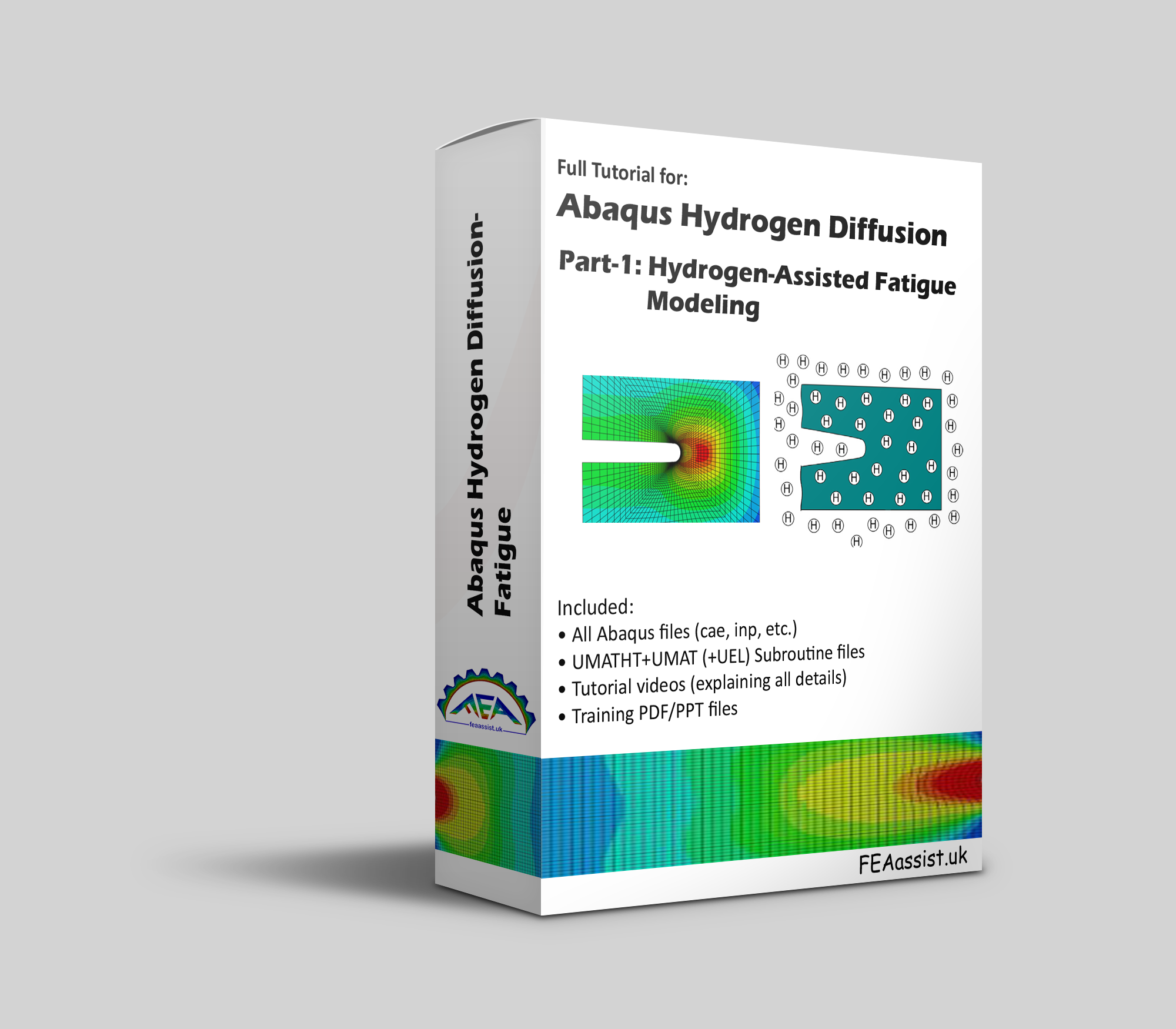
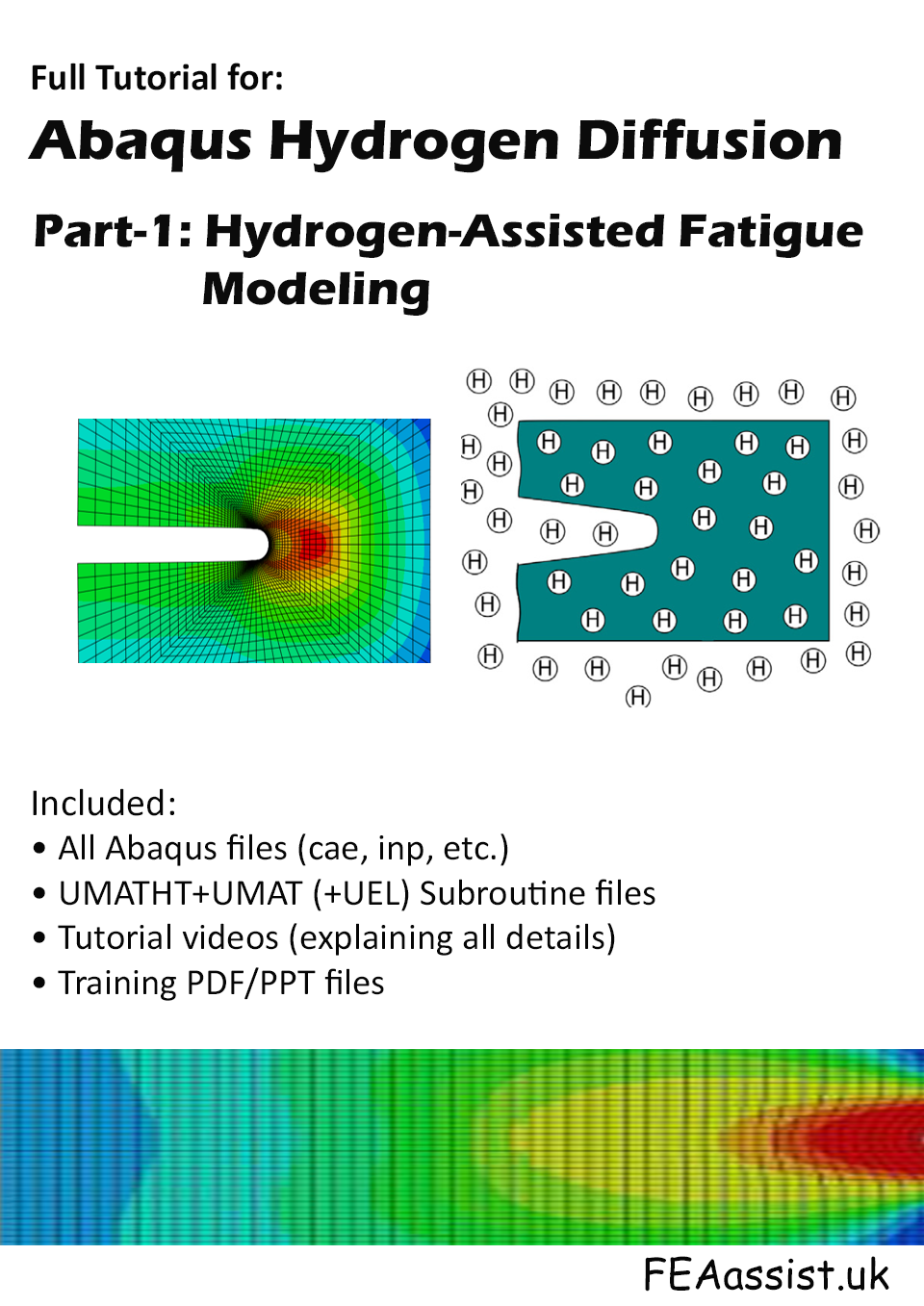
Hydrogen embrittlement and hydrogen-assisted fatigue crack growth are among the most dangerous failure mechanisms in high-strength steels, offshore structures, pipelines, pressure vessels, and hydrogen energy components. Accurate prediction for Abaqus hydrogen Fatigue analysis requires a coupled simulation of Abaqus hydrogen diffusion, crack-tip stress fields, plasticity, and microstructural trapping (Abaqus hydrogen embrittlement modeling by Abaqus UMATHT hydrogen).
This package provides a physics-based and research-validated solution for Abaqus hydrogen embrittlement modeling under cyclic loading conditions. Using Abaqus user subroutines (UMAT hydrogen fatigue, Abaqus UMATHT hydrogen), you can simulate hydrogen accumulation near crack tips and evaluate safe vs unsafe fatigue regimes.
The methodology is based on a peer-reviewed framework reported in Acta Materialia (2020) and implemented here in an industrial-grade Abaqus workflow suitable for research papers, PhD projects, and engineering integrity assessment. While documentation [1,2,3] is limited for Hydrogen and UMAT [4], this implementation is fully compatible with Abaqus/Standard as developed by Dassault Systèmes.
Key Features of Abaqus Hydrogen Diffusion Package
- ⚙️ Stress-assisted hydrogen diffusion in Abaqus (fully coupled stress–diffusion formulation)
- 🧲 Multi-trap hydrogen transport modeling including lattice hydrogen (CL) and trapped hydrogen (CT)
- 🔁 Abaqus hydrogen fatigue modeling under cyclic loading and loading frequency effects
- 🧠 Crack-tip plasticity coupling and boundary layer crack simulation workflow
- 📈 Hydrogen accumulation prediction controlled by diffusion time ratio (De / f)
- 💻 Professional Abaqus implementation using UMAT + UMATHT + UEL
What You Can Predict Using Abaqus Hydrogen Fatigue
-
Lattice Hydrogen Concentration (CL)
Predict lattice hydrogen concentration in Abaqus around the crack tip and within the bulk material.
-
Trapped Hydrogen Concentration (CT)
Model hydrogen trapping in Abaqus using a multi-trap framework. Trapped hydrogen strongly affects crack growth and embrittlement.
-
Hydrogen Accumulation vs Loading Frequency
Simulate frequency-controlled crack-tip hydrogen buildup. This explains why hydrogen-assisted fatigue becomes severe at low frequencies.
-
Safe vs Unsafe Hydrogen Fatigue Regimes
Identify regimes where hydrogen diffusion is dominant vs where cyclic loading is dominant. Predict safe fatigue conditions based on maximum crack-tip hydrogen concentration.
Pricing Options for Abaqus Hydrogen Diffusion
Choose the package that matches your needs. If your project requires hydrogen cracking, hydrogen damage modeling, or full 3D Abaqus hydrogen diffusion, the complete suite is the option.
Choose Your Hydrogen Modeling Capability
Part 1 — Diffusion–Fatigue
- ⚙️ Stress-assisted diffusion
- 🧲 Multi-trap transport
- 💻 UMAT + UMATHT + UEL
- 📂 Tutorials & files
£199 (Student: £139)
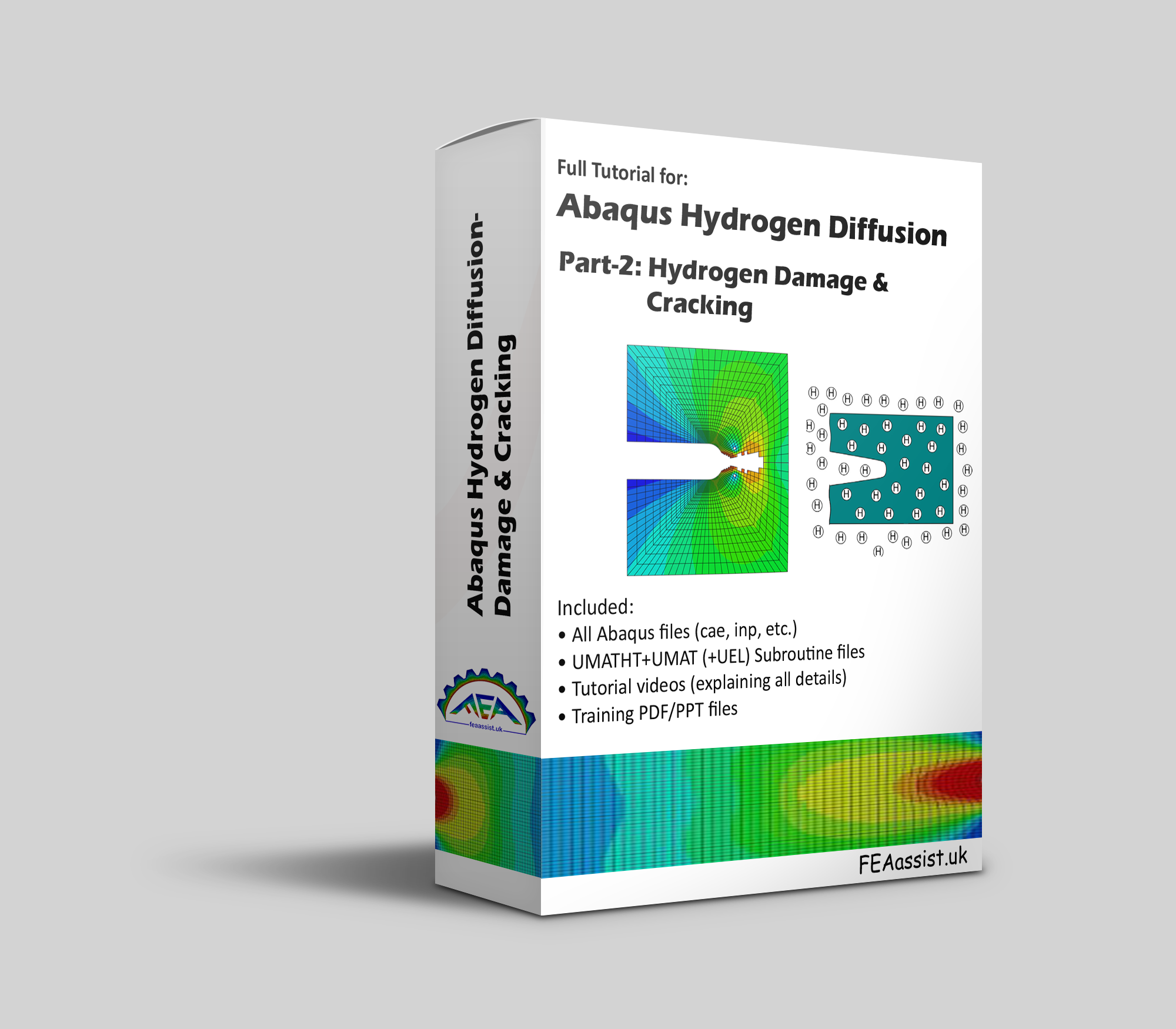
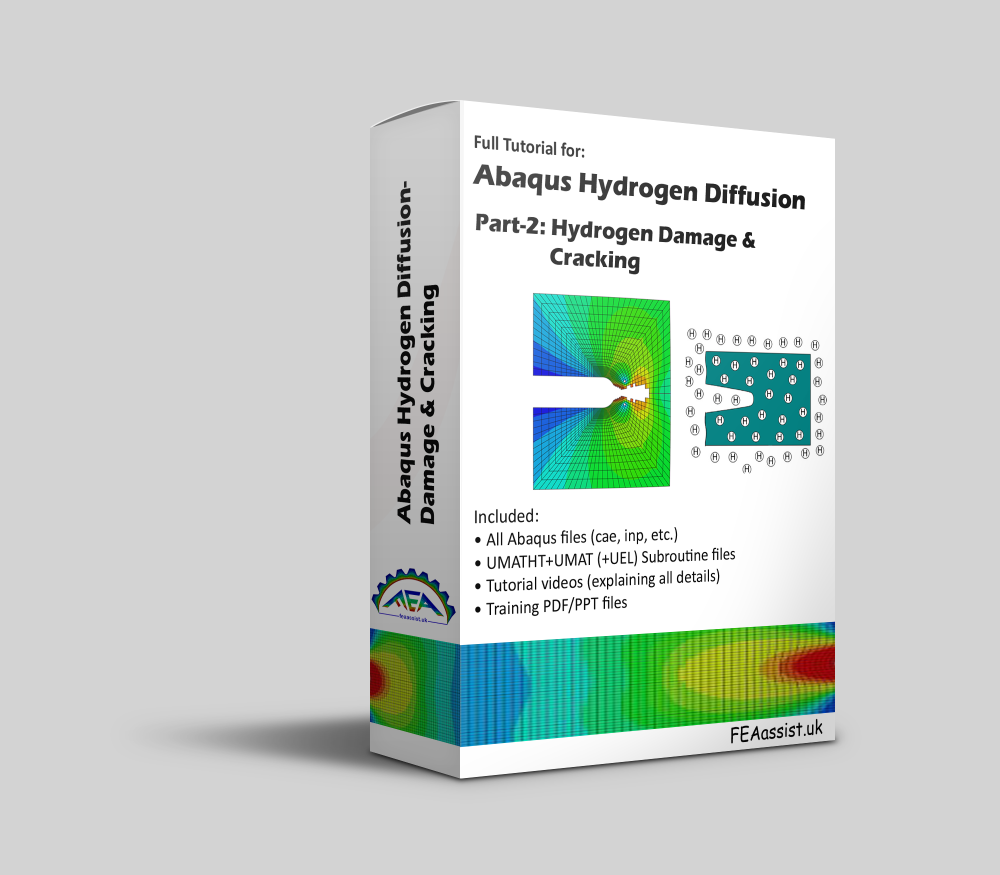
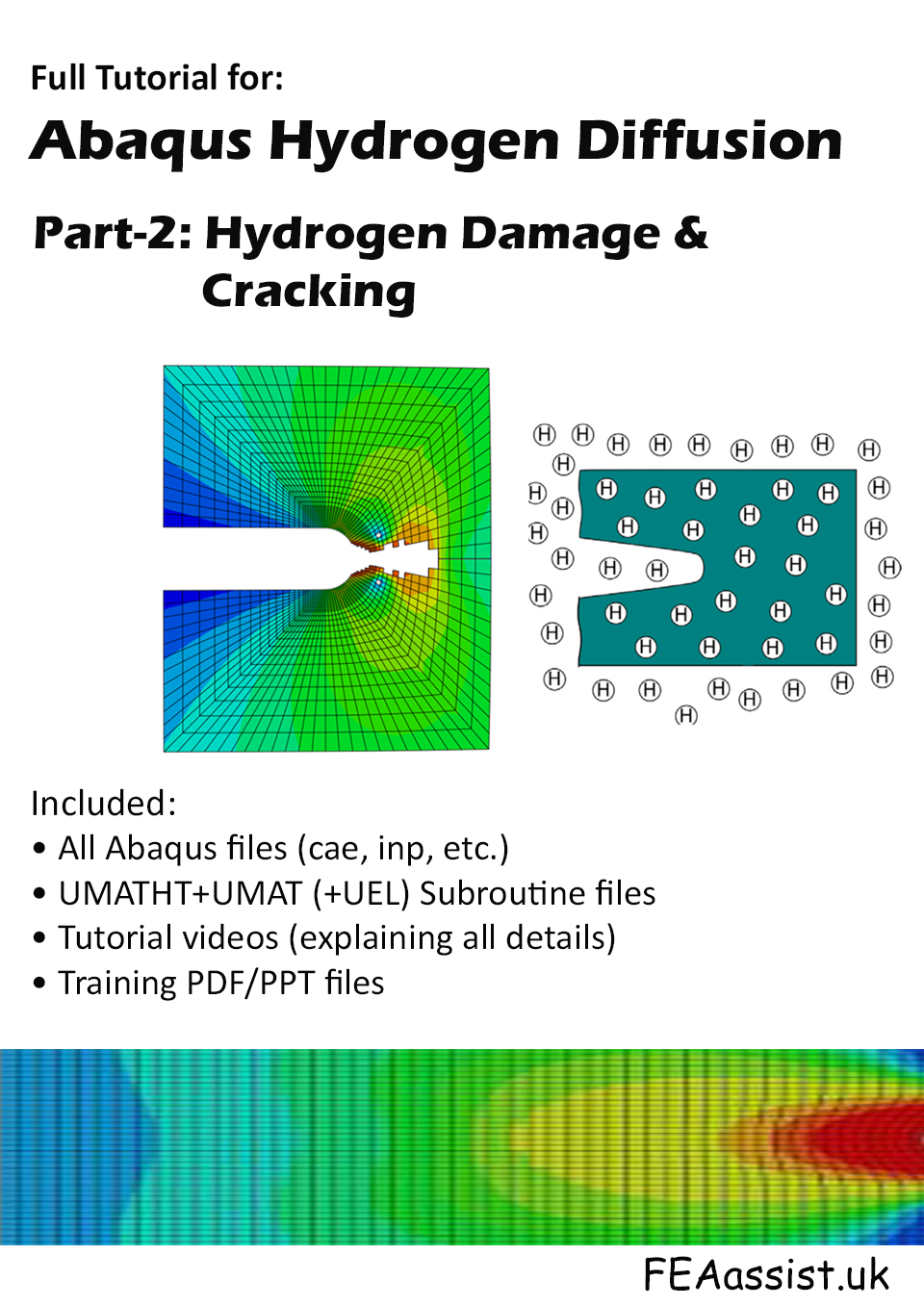
Part 2 — Damage & Cracking
- 🧠 Diffusion–damage coupling
- 🔬 Hydrogen degradation
- 📈 Crack growth modeling
- 🧩 Advanced workflow
£299 (Student: £229)
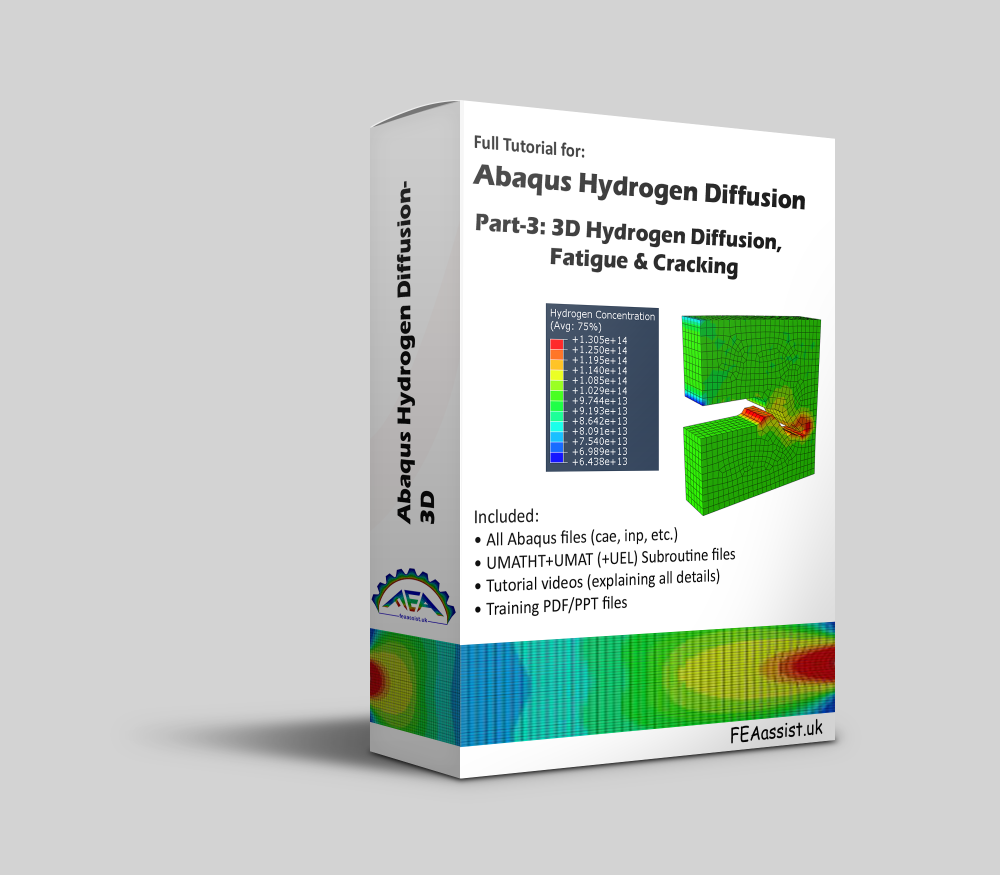
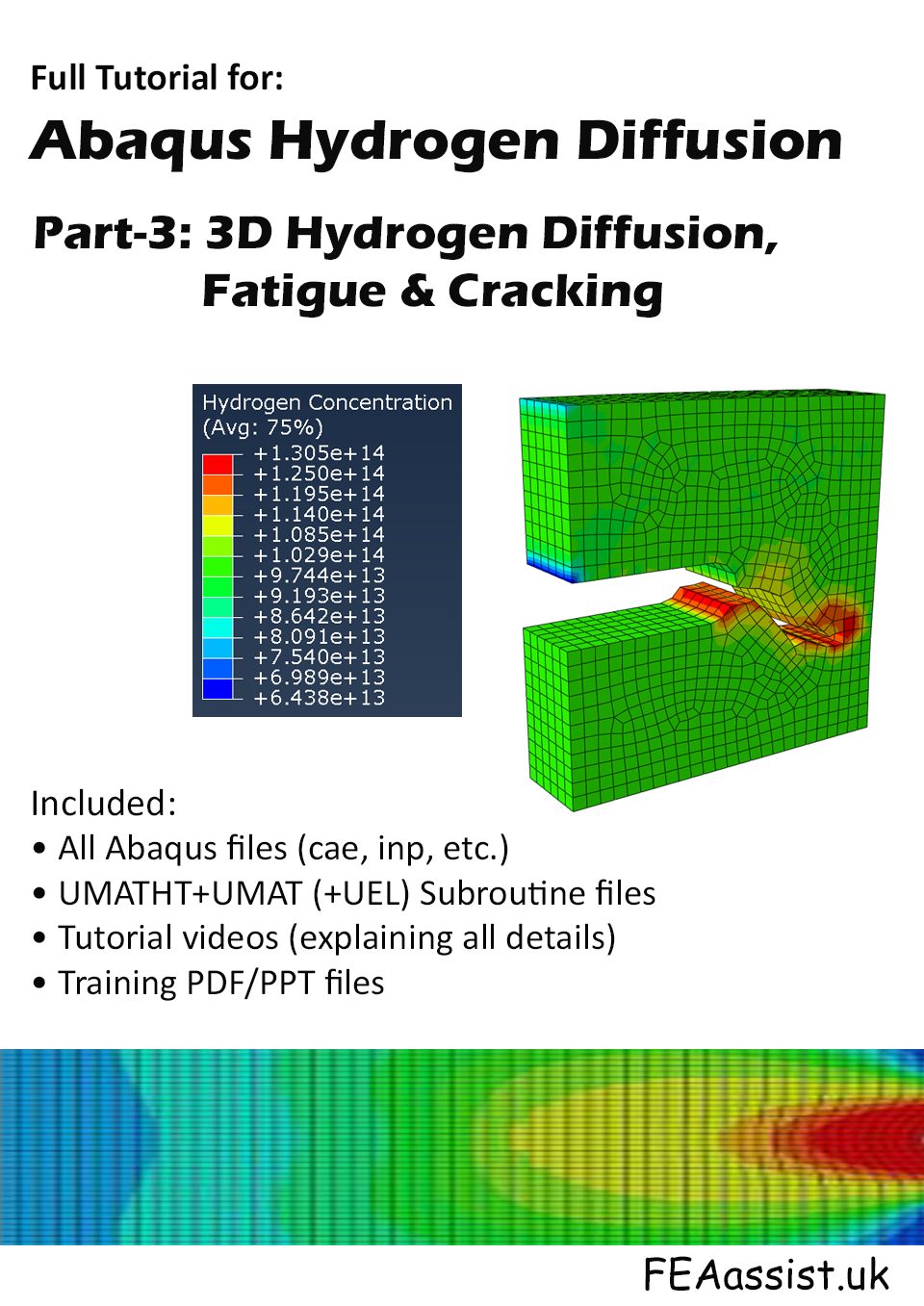
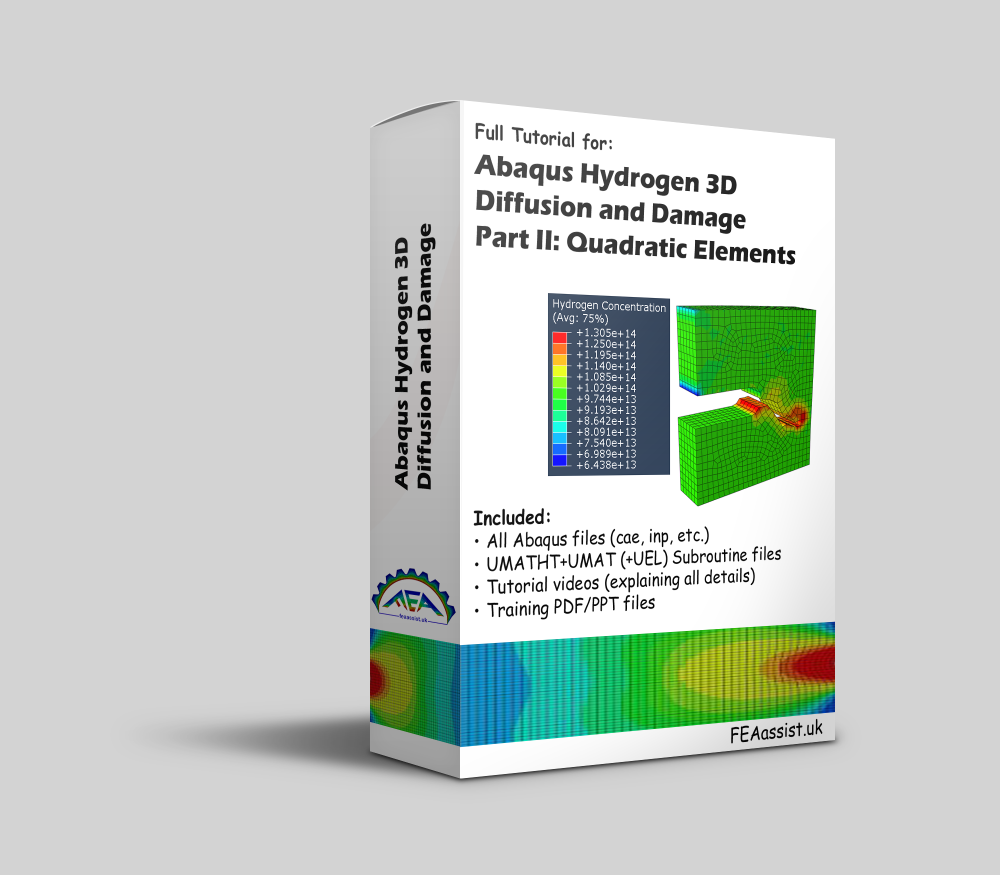
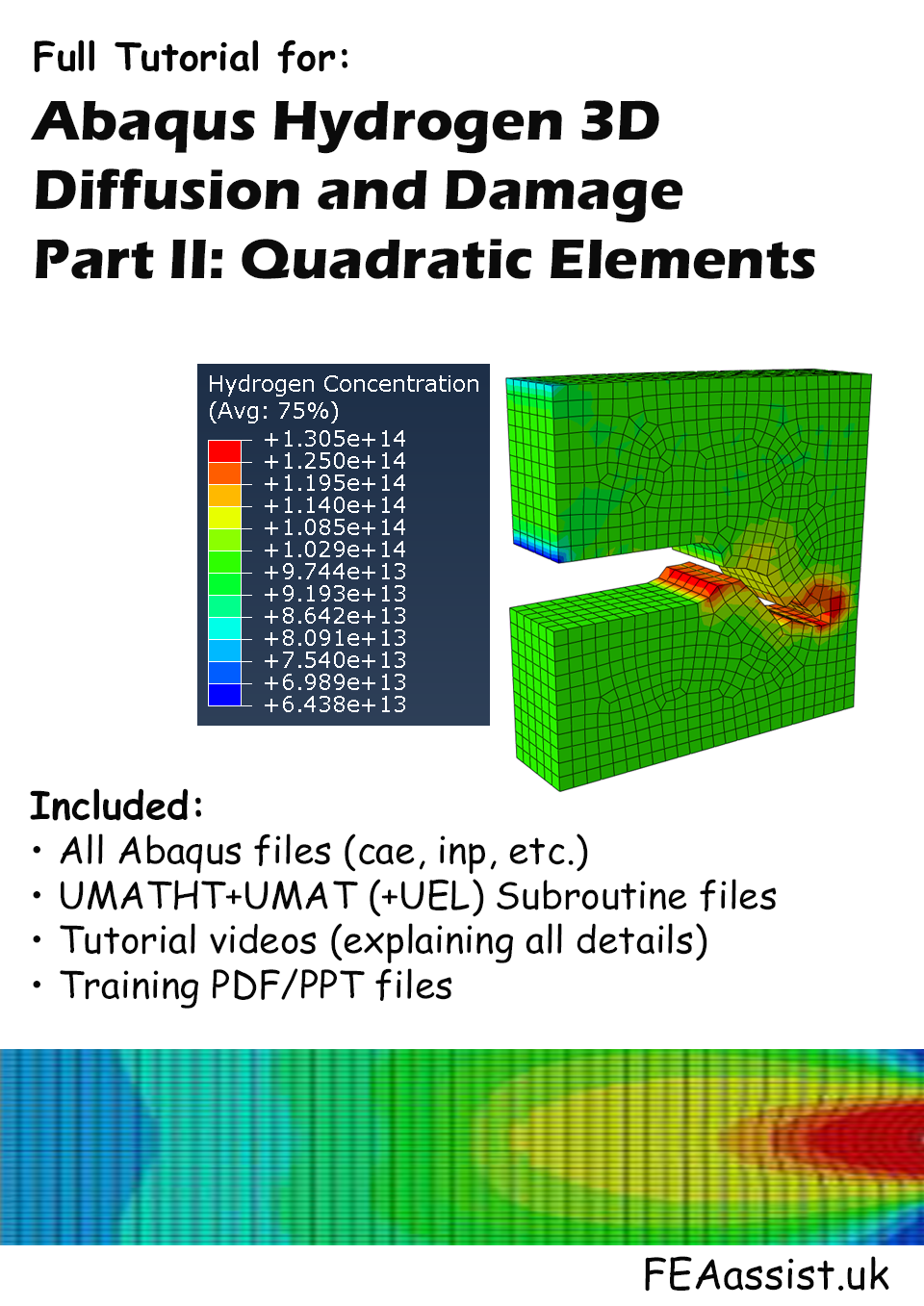
Part 3 — Full 3D Simulation
-
- 🌐 3D diffusion–fatigue–cracking
- 🏗 Real geometries
- 🏭 Industrial modeling
- 📘 Advanced documentation
£399 (Student: £319)
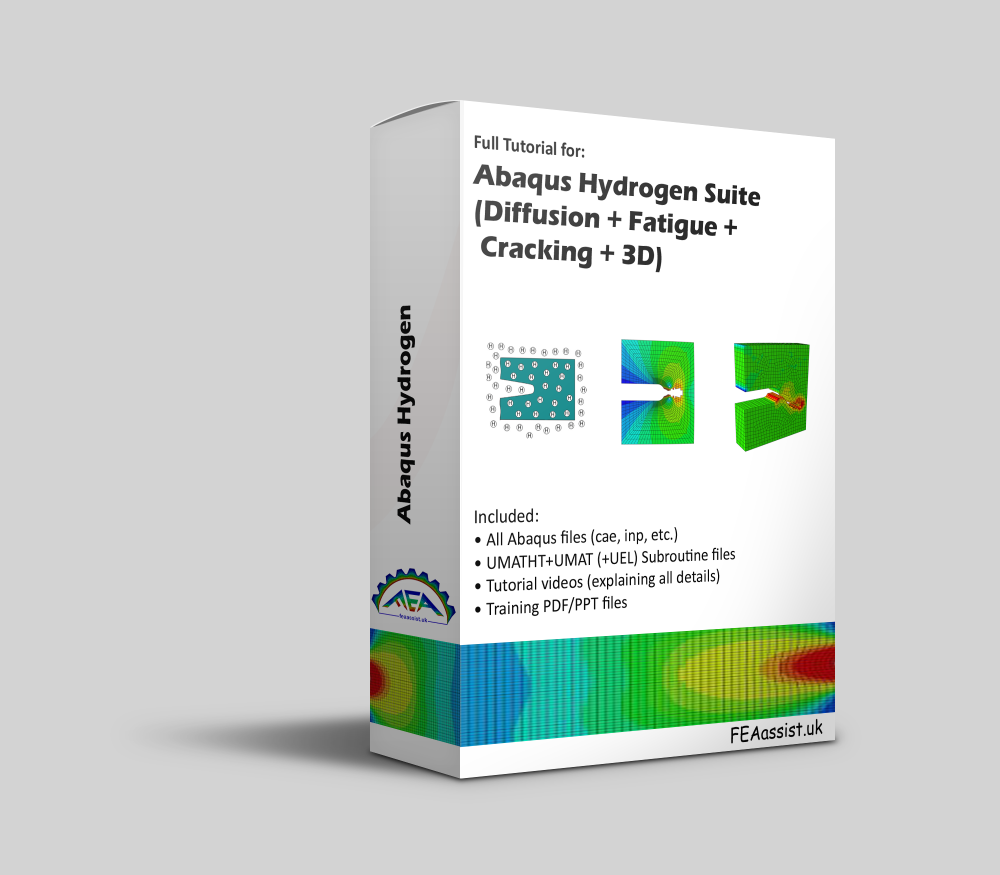
Complete Hydrogen Suite
- ✔ Diffusion & Fatigue modeling
- ✔ Damage & cracking
- ✔ Full 3D simulations
£599 (Student bundle: £449)
Optional Add-Ons & Supports (Abaqus hydrogen diffusion)
In addition to the core hydrogen diffusion & fatigue package, you can enhance your experience with tailored support and consulting services:
🔎 Consultation Add-On
Personalized Abaqus hydrogen embrittlement modeling support for your project. Choose the duration that fits your needs:
- 2 hours – £199
- 4 hours – £299
- 8 hours – £499
Ideal for bespoke model setup, interpretation assistance or advanced customization.ce.
Upgrade Abaqus hydrogen diffusion to Hydrogen Cracking or Full 3D Modeling
This product focuses on Hydrogen Diffusion Modeling in Abaqus and Abaqus hydrogen fatigue modeling. If you want to simulate hydrogen-induced cracking, damage evolution, or full 3D diffusion-fatigue-cracking,
explore these advanced packages:
- ➡️ Part 2: Abaqus Hydrogen Damage & Cracking Package
- ➡️ Part 3: 3D Diffusion–Fatigue–Cracking Package
- ➡️ Complete Hydrogen Suite: Best value bundle for all implementations
🚀 Order Project 🔬 Continue to Hydrogen Part-2 & 3
Advanced Crack Modeling?
For variational fracture and phase-field crack propagation methods, see our advanced implementation: Abaqus Phase Field Fracture Package.
FAQ — Abaqus Hydrogen Diffusion & UMATHT Implementation
How can I model hydrogen diffusion in Abaqus?
Hydrogen diffusion in Abaqus requires a transport formulation. This package provides a complete implementation using UMATHT and coupled elements (UEL) to simulate stress-assisted diffusion and hydrogen trapping.
Does this package include UMAT and UMATHT source codes?
Yes. The full Abaqus user subroutine codes (UMAT, UMATHT, and UEL) are included together with ready-to-run project files.
Can I simulate trapped hydrogen concentration (CT)?
Yes. The framework predicts both lattice hydrogen concentration (CL) and trapped hydrogen concentration (CT) using a multi-trap transport formulation.
Is this suitable for hydrogen embrittlement and hydrogen-assisted fatigue?
Yes. The workflow is designed for hydrogen embrittlement studies and fatigue crack growth acceleration due to hydrogen diffusion and hydrogen trapping near crack tips.
Is this package 2D or 3D?
This package is focused on 2D crack-tip modeling. For full 3D hydrogen diffusion and fatigue simulations, see Part 3.
Can I request a custom project?
Yes. If you need a custom geometry, boundary conditions, calibration, or industrial workflow, custom Abaqus hydrogen diffusion modeling services are available.
Reviews
There are no reviews yet.